Neighbourhood guide · Updated November 2026
Richmond Hill Village, Richmond Hill: Neighbourhood Guide and Local Agents (2026)
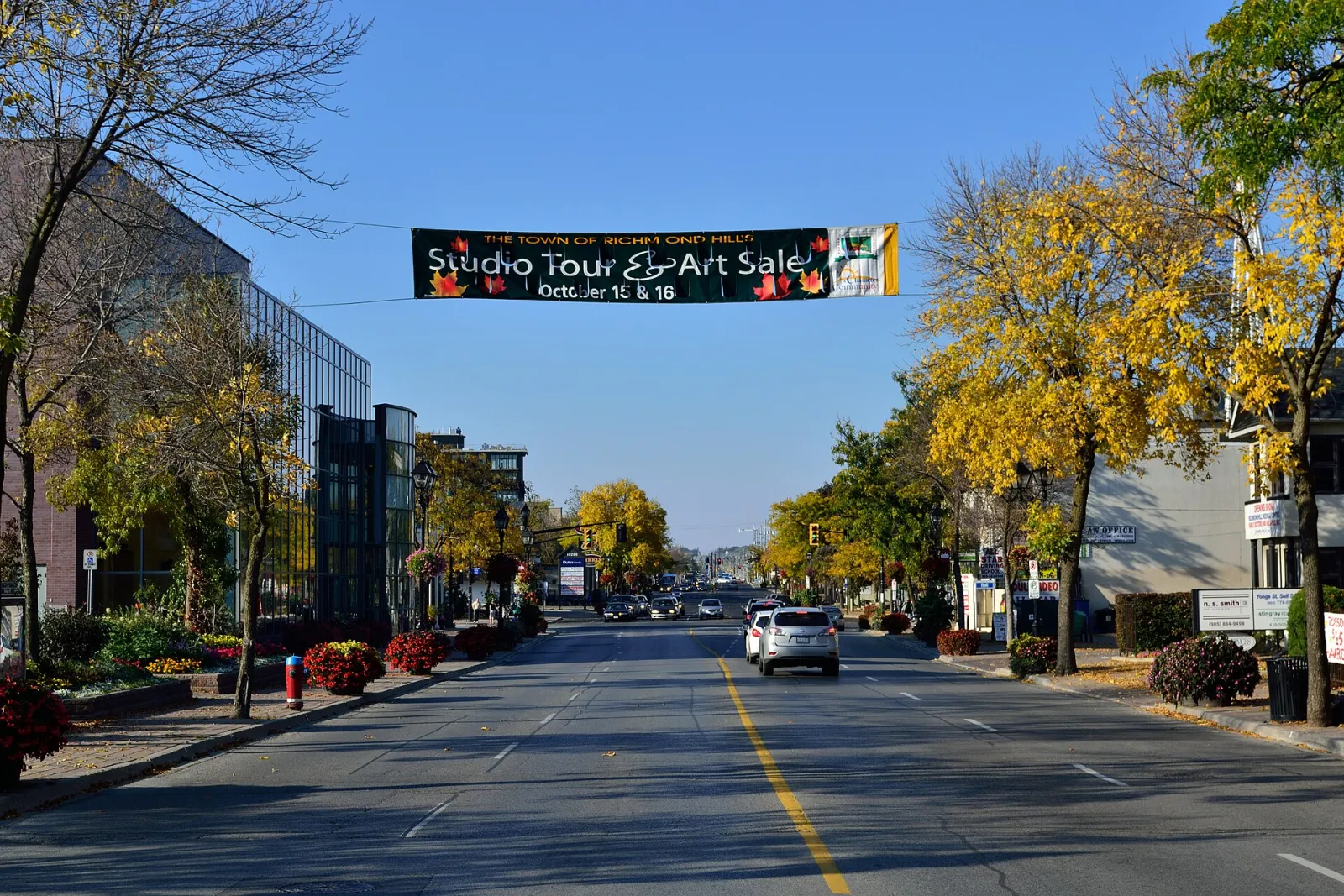
Where this is: The old downtown along Yonge Street, roughly from Major Mackenzie Drive north to Richmond Heights, with the residential streets on either side.
Before Richmond Hill became a city of more than 200,000 people, it was a small village strung along Yonge Street. That original core still exists, on the stretch of Yonge between Major Mackenzie Drive and Richmond Heights, and it is the closest thing Richmond Hill has to a traditional main street. As late as 1957, when Richmond Hill was incorporated as a town, its whole territory fitted between Crosby Avenue, Church Street, Major Mackenzie and the Mill Pond.
A number of nineteenth and early twentieth century buildings along this stretch of Yonge are individually designated under the Ontario Heritage Act. That matters to a buyer because a designation attaches to a specific property, not to a district, so two similar-looking houses a few doors apart can face very different rules on alterations and demolition.
The Richmond Hill Centre for the Performing Arts sits on Yonge at Wright Street, and the core has its own restaurants and services, but it is a working main street with through traffic rather than a pedestrian village. Viewing at rush hour gives a more honest picture than a quiet Sunday.
Find the right agent for you
Our ranked lists are organised by what you need rather than by neighbourhood. Start with the one that fits you best.
- First-time home buyer realtors in Richmond Hill
- Realtors for investors in Richmond Hill
- Downsizing & 55+ realtors in Richmond Hill
- Realtors for newcomers to Canada in Richmond Hill
- Condo realtors in Richmond Hill
- Luxury home realtors in Richmond Hill
- Pre-construction realtors in Richmond Hill
- Townhouse realtors in Richmond Hill
- Mandarin-speaking realtors in Richmond Hill
- Cantonese-speaking realtors in Richmond Hill
- Russian-speaking realtors in Richmond Hill
- Farsi-speaking realtors in Richmond Hill
- Korean-speaking realtors in Richmond Hill
- Italian-speaking realtors in Richmond Hill
Housing stock in Richmond Hill Village
A mix of older detached homes on the streets just off Yonge, some dating from the village era, alongside postwar houses, low-rise apartment buildings and newer townhome and mid-rise infill on former commercial lots along the Yonge corridor.
Getting around
Viva Blue runs along Yonge Street between Finch station in Toronto and Newmarket. Through the old core the buses share the road with traffic, because the dedicated rapidway lanes stop at Major Mackenzie and resume north of Levendale Road. Richmond Hill GO station, at 6 Newkirk Road just east of the core, is on the Richmond Hill line, which runs weekday rush-hour trains only, with GO bus route 61 covering other times. Highway 404 is a short drive east.
Who Richmond Hill Village tends to suit
Buyers who want to walk to a library, a theatre and a coffee shop, people who rely on the GO train for a downtown Toronto commute, and anyone who would rather own an older house with character than a newer one in a subdivision.
What to ask an agent about Richmond Hill Village
General questions get general answers. These are specific to this neighbourhood, and an agent who genuinely works here will have a direct answer to each.
- Is this specific property designated or listed on the City heritage register, and what would that mean for the renovation or addition I have in mind?
- How much of the parking, noise and traffic on this street comes from Yonge Street and the GO station, and does it change by time of day?
- For an older house here, what should a pre-purchase inspection cover beyond the usual, particularly wiring, foundations, drainage and any past insurance claims?
More in our guide to questions to ask before hiring an agent.
Nearby and comparable areas
- Mill Pond West of Yonge Street around Mill Pond Park on Mill Street, just west of the old village core and north of Major Mackenzie Drive.
- Rouge Woods East of Bayview Avenue and west of Leslie Street, between Major Mackenzie Drive to the south and Elgin Mills Road to the north.
- Westbrook The west side of Richmond Hill around Bathurst Street and Elgin Mills Road, west of Yonge Street, on the southern edge of the Oak Ridges Moraine.
- Observatory East of Yonge Street around Hillsview Drive and the David Dunlap Observatory lands, in the centre-south of Richmond Hill near 16th Avenue.
Common questions about Richmond Hill Village
What should I ask an agent about Richmond Hill Village specifically?
Is this specific property designated or listed on the City heritage register, and what would that mean for the renovation or addition I have in mind? How much of the parking, noise and traffic on this street comes from Yonge Street and the GO station, and does it change by time of day? For an older house here, what should a pre-purchase inspection cover beyond the usual, particularly wiring, foundations, drainage and any past insurance claims?
What kind of housing is in Richmond Hill Village?
A mix of older detached homes on the streets just off Yonge, some dating from the village era, alongside postwar houses, low-rise apartment buildings and newer townhome and mid-rise infill on former commercial lots along the Yonge corridor.